
Tax Prep 101: Online Payment Transactions Reporting Requirements
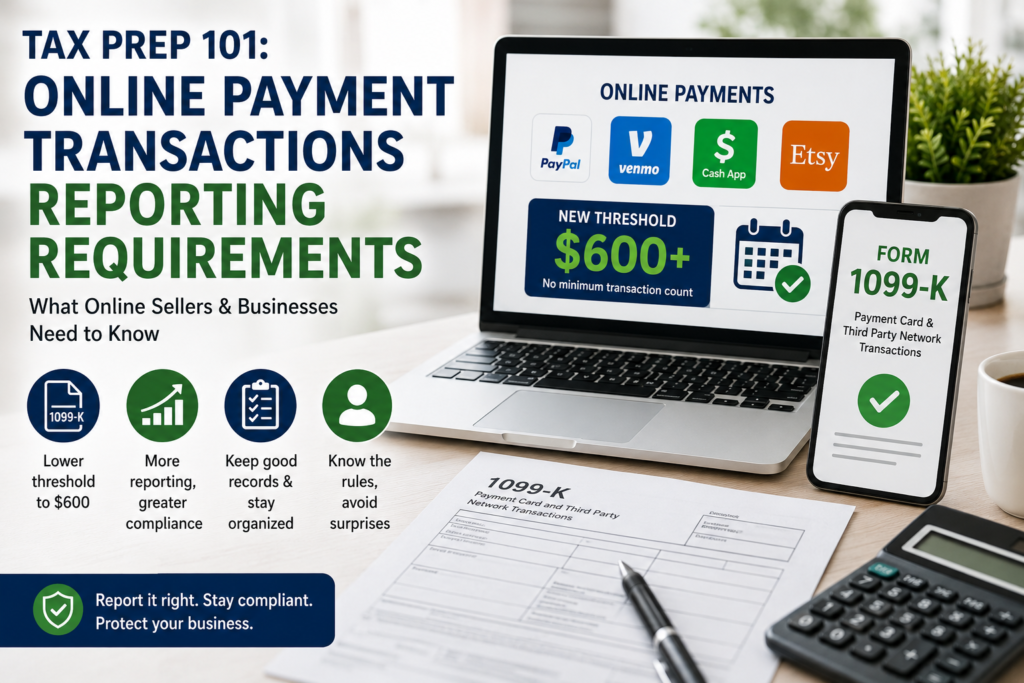
The American Rescue Plan Act of 2021 introduced a significant change to the reporting requirements for transactions on online payment platforms. Previously, these platforms were only required to report transactions to the IRS if a user had more than 200 transactions totaling over $20,000 in a year. The new legislation drastically lowered this threshold to $600, with no minimum transaction count required
This change affects third-party settlement organizations (TPSOs), which include popular platforms such as PayPal, Venmo, Cash App, and online marketplaces like eBay and Etsy
These platforms are now required to report to the IRS any business transactions that total $600 or more in aggregate for the year
Rationale Behind the Changes
The IRS has several reasons for implementing these new reporting requirements:
- Enhancing Tax Compliance: By requiring more detailed reporting from TPSOs, the IRS aims to ensure that taxpayers accurately report their income and pay the taxes they owe
2. Addressing the Tax Gap: The new rules are part of a strategy to close the gap between taxes owed and taxes paid, particularly in the realm of digital transactions
3. Adapting to Technological Changes: These requirements are a response to the evolving financial landscape, ensuring that the tax system keeps pace with new payment technologies
4. Simplifying Tax Filing: By collecting more information from TPSOs, the IRS aims to provide taxpayers with the necessary documentation to accurately report their income, potentially reducing errors and the need for costly third-party services

Implications for Users
This is what ALL those that have online stores or a business that generate online payments must pay attention. The lowered threshold means that more individuals and small businesses will receive Form 1099-K, potentially increasing their tax reporting obligations
Here are some key points to consider:
- Increased Reporting: More users of online payment platforms will receive Form 1099-K due to the lowered threshold. This includes individuals with side hustles, small businesses, and even casual sellers who might not have previously received such forms.
- Tax Compliance: All income from sales of goods and services is taxable and must be reported on tax returns, regardless of whether a Form 1099-K is received. The form serves as a record of income but does not change the underlying tax obligations.
- Personal Transactions: The new rules do not affect personal transactions, such as splitting a bill or sending gifts. These are not subject to Form 1099-K reporting.
- Record Keeping: Users will need to keep more detailed records of their transactions to accurately report income and distinguish between personal and business transactions.
Learn About:- Identifying Critical Accounting Issues
Payment platforms are required to adjust their systems to comply with the new reporting requirements. This includes:
- Updating their transaction tracking and reporting mechanisms to ensure compliance with the new thresholds.
- Communicating these changes to their users, particularly those who may be affected by the new reporting requirements
- Ensuring their systems can distinguish between personal and business transactions to prevent unnecessary reporting.
The new IRS rules for reporting transactions on online payment platforms represent a significant shift in how digital transactions are monitored and reported for tax purposes. While the full implementation of the $600 threshold has been delayed, users of these platforms should prepare for increased reporting obligations in the coming years.
Failure to report said income could subject the business or individual to exhaustive audits and sizeable penalties. The IRS also could conduct retroactive inquiries going back 3 years in order to determine if online financial transactions have been omitted from prior years’ returns.
As a Business Accounting and Tax Planning Specialist, I recommend that users of these platforms:
- Keep detailed records of all transactions, distinguishing between personal and business use.
- Understand their tax obligations, regardless of whether they receive a Form 1099-K.
- Stay informed about the implementation timeline and any further changes to the reporting requirements.
- Consult with a tax professional if they have questions about how these changes affect their specific situation.
By staying informed and prepared, users can navigate these changes effectively and ensure compliance with their tax obligations. Reach out if you have any questions or require additional information.